

Cost-Effective Alternative with Superior Performance
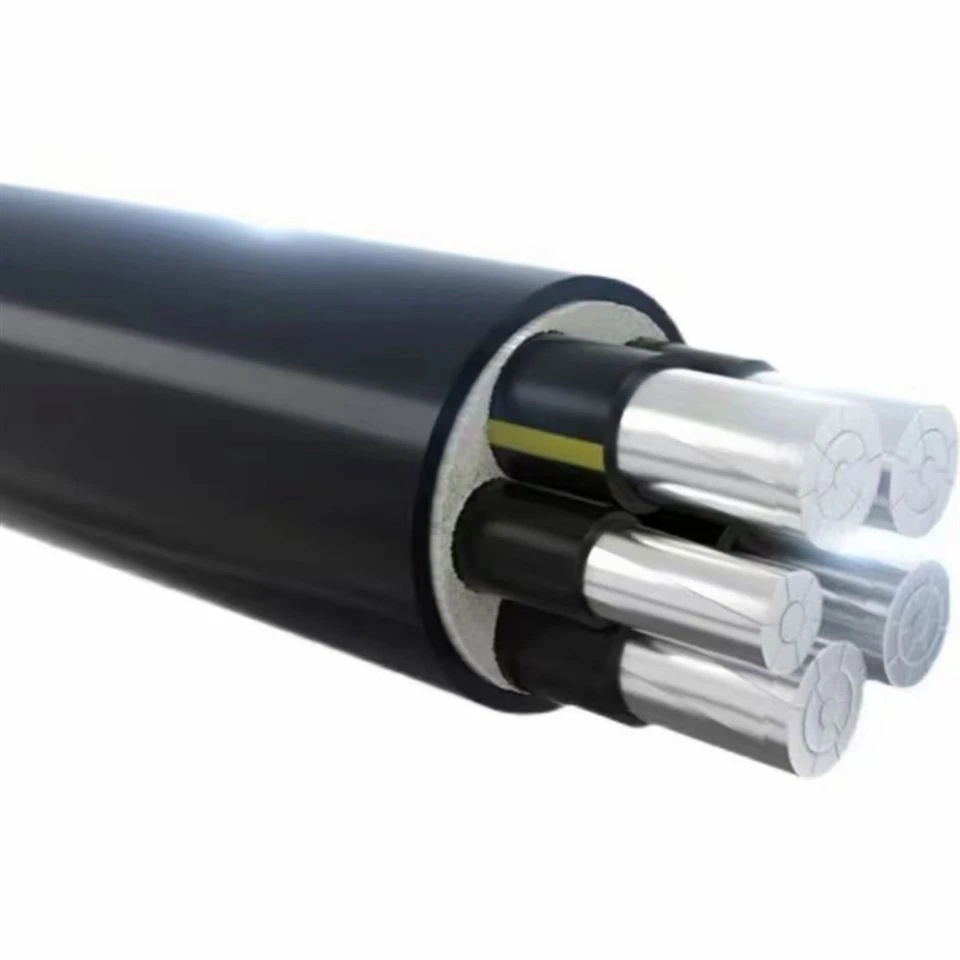
In residential buildings, commercial complexes, and industrial park low-voltage distribution projects, copper cable cost pressure continues to grow. Traditional pure aluminum cables have been rejected by many design institutes and owners due to creep, joint heating, and brittleness issues. Anhui Tiankang's aluminum alloy cable (YJHLV series) uses AA8000 series rare earth high-strength aluminum alloy conductors (8176/8030 grade). Conductivity is about 61% IACS (about 61% of copper). By adding iron, copper, magnesium, and other alloy elements, we fundamentally solved the three major problems of pure aluminum cables: easy creep, loose joints causing heating, and easy fracture during bending. The conductor uses shaped wire compact stranding technology. The fill factor exceeds 93%. This ensures tighter and more stable terminal connections.
There is a key conversion relationship between aluminum alloy cable and copper cable. For the same current carrying capacity, the aluminum alloy cable cross-section needs to be about 1.5 times that of copper cable. For example, the originally designed copper YJV-4×120mm² is replaced with YJHLV-4×185mm². The larger cross-section means the outer diameter and bending radius increase somewhat. However, aluminum alloy cable weighs only 40% of copper cable. The bending radius is only 7 times the cable diameter (compared to 10 times for copper cable). This makes it more flexible in some installation scenarios.
Aluminum alloy cable products offer long-term operating cost advantages. The initial investment is 35-45% lower than copper cable. However, power loss under the same load is slightly higher than copper. This makes it more suitable for stable loads, non-24-hour full-load operation in residential buildings and general commercial projects.


Three Structural Configurations
We offer three main structural configurations. The non-armored type (YJHLV/TC90) suits indoor cable trays, conduits, and dry environments. The aluminum alloy interlocking armored type (YJHLV8/AC90) is our recommended energy-saving model. The aluminum self-locking armor is non-magnetic. When three-phase cables are densely installed, there is no eddy current heating like steel tape armor. It is lighter in weight and has a smaller bending radius. This makes it ideal for dense cable trays and high-rise shaft installations.
For direct burial underground and road crossing conditions, the steel tape armored type (YJHLV22) is available. However, care must be taken with eddy current losses in the steel tape for high-current long-distance lines. All models use XLPE insulation with a long-term working temperature of 90°C.
Installation Requirements and Export Documentation
All products strictly follow GB/T 31840 and NB/T 42051 standards. Conductor material complies with ASTM B800 standards. Aluminum alloy cables must use dedicated aluminum alloy terminals or copper-aluminum transition terminals for crimping. Direct copper terminal to aluminum conductor connection is strictly prohibited. This prevents electrochemical corrosion and contact resistance heating. Each shipment includes detailed installation process guidelines. Export shipments include CE and IEC standard certification.

Product Specifications
|
Parameter |
Non-Armored (YJHLV/TC90) |
Interlocking Armored (YJHLV8/AC90) |
Steel Tape Armored (YJHLV22) |
|
Application |
Indoor trays, Conduit |
Dense trays, High-rise shafts (energy-saving preferred) |
Direct burial, Road crossing |
|
Conductor Material |
AA8000 aluminum alloy (8176/8030) |
AA8000 aluminum alloy |
AA8000 aluminum alloy |
|
Conductor Fill Factor |
≥93% (shaped wire compact) |
≥93% (shaped wire compact) |
≥93% (shaped wire compact) |
|
Insulation Material |
XLPE (90°C) |
XLPE (90°C) |
XLPE (90°C) |
|
Armor Material |
No armor |
Aluminum alloy self-locking (non-magnetic) |
Double steel tape (magnetic) |
|
Armor Eddy Current Loss |
None |
None (energy-saving) |
Yes (significant at high current) |
|
Bending Radius |
10 x cable diameter |
7 x cable diameter (better than copper) |
12 x cable diameter |
|
Weight (vs copper) |
~40% of copper |
~40% of copper |
~45% of copper |
|
Cross-Section Conversion |
Alloy ≈ Copper × 1.5 |
Alloy ≈ Copper × 1.5 |
Alloy ≈ Copper × 1.5 |
|
Connection Requirement |
Special alloy/transition terminals (no direct copper-aluminum) |
Special alloy/transition terminals (no direct copper-aluminum) |
Special alloy/transition terminals (no direct copper-aluminum) |
|
Applicable Standards |
GB/T 31840, NB/T 42051, ASTM B800 |
GB/T 31840, NB/T 42051, ASTM B800 |
GB/T 31840, NB/T 42051, ASTM B800 |
|
Recommended Application |
Commercial centers, Parks, Street lights, Temporary power |
Dense trays, High-rise shafts |
Direct burial (need eddy current assessment) |
|
Not Recommended |
Critical loads (hospitals/data centers), Strong corrosion underground, 24/7 full load long distance |
Critical loads (hospitals/data centers), Strong corrosion underground, 24/7 full load long distance |
Critical loads (hospitals/data centers), Strong corrosion underground, 24/7 full load long distance |
|
Warranty Period |
18 months |
18 months |
18 months |
Hot Tags: aluminum alloy cable, China aluminum alloy cable manufacturers, suppliers, factory