Specialty Cables for Industrial Control, Optical Communication and Power Applications
Specialty cables are designed for applications that require specific electrical, signal transmission, environmental or structural performance beyond general-purpose power cables. Product selection depends on the transmitted signal or power, installation environment, operating temperature, shielding or protection requirements, and applicable project specifications.
Our specialty cable range covers shielded computer cables for industrial control systems, hybrid composite cables and photoelectric composite cables for integrated communication and power transmission, and nuclear power plant cables for different safety classifications. Cable structure, conductor size, insulation, sheath, shielding and protection options can be selected according to the intended application.
-
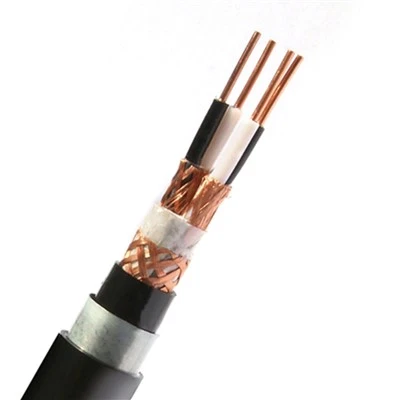
![Shielded Computer Cable]() Shielded Computer CableOur Shielded Computer Cable is designed for transmitting analog signals, digital signals and control signals in industrial automation systems. It is commonly used in DCS and PLC control systems, instrumentation circuits, power plants,...view more
-
![Hybrid Composite Cable]() Hybrid Composite CableOur Hybrid composite cable combines optical fiber communication units and copper power conductors within a single cable structure. It is designed for installations where equipment requires both electrical power and optical signal...view more
-
![Photoelectric Composite Cable]() Photoelectric Composite Cable5G micro base stations, smart street lights, road surveillance, and campus security systems need both power supply and network communication for their devices. The traditional approach is to install separate power cables and...view more
-
![Nuclear Power Plant Cable]() Nuclear Power Plant CableNuclear power plants are the most demanding application for cables in industry. Cables inside the nuclear island must withstand long-term gamma radiation exposure. They must also survive LOCA (loss of coolant accident) conditions with...view more


Shielded Computer Cable for Industrial Control Systems
Shielded computer cables transmit analog signals, digital signals and control signals between field instruments, control equipment and industrial automation systems. They are used in DCS, PLC, industrial computer, instrumentation and process control circuits in power plants, petrochemical facilities and industrial control rooms.
Shielded Computer Cable Specifications and Available Configurations
| Common Models | DJYVP, DJYPVP, DJYPVP2, DJYVP2, DJYPV, DJYVP3 |
|---|---|
| Rated Voltage | 300/500V for standard PE-insulated series |
| Insulation Materials | PE, XLPE, F46 and silicone rubber |
| Long-Term Operating Temperature | PE: 70°C; XLPE: 90°C; silicone rubber: 180°C; F46: 200°C |
| Shielding Structures | Individual shielding, overall shielding, or individual and overall shielding |
| Shielding Materials | Braided copper wire, copper tape, or aluminum-plastic composite tape |
| Armored Options | Steel tape armor, including DJYVP22 and DJYPVP22; steel wire armor, including DJYVP32 |
| Fire Performance Options | Flame-retardant, low-smoke halogen-free and low-smoke halogen-free flame-retardant configurations, according to the selected type |
| Intrinsically Safe Type | DJYPVP-ia |
Shielding, Insulation and Protection Options
The shielding arrangement can be selected according to the signal circuit and installation environment. Individual shielding is available for separating interference between pairs or groups, while overall shielding provides an additional shielding layer around the cable core assembly. Combined individual and overall shielding can be selected where both forms of protection are required.
- Conductor arrangements and flexible conductor options can be specified for the intended installation.
- Insulation and sheath materials can be selected from available PE, XLPE, F46 and silicone rubber configurations.
- Braided copper wire, copper tape and aluminum-plastic composite tape are available shielding options.
- Steel tape or steel wire armor can be selected where additional mechanical protection is required.
- Flame-retardant, low-smoke halogen-free and intrinsically safe configurations are available for applicable cable designs.
Hybrid Fiber Optic and Power Cable for Integrated Transmission
Hybrid composite cable integrates optical fiber communication units and copper power conductors in one cable structure. It allows optical signals and electrical power to be transmitted through a combined cable, helping reduce the need for separate communication and power cable routes in compatible installations.
Hybrid Composite Cable Specifications and Available Configurations
| Optical Fiber Types | Single-mode G.652D and G.657A2 |
|---|---|
| Indoor Fiber Count | 2–24 fibers |
| Outdoor Duct or Direct-Buried Fiber Count | 2–24 fibers |
| Aerial Self-Supporting Fiber Count | 2–12 fibers |
| Special Power System Fiber Count | 12–48 fibers, subject to the selected project configuration |
| Indoor Copper Conductor Area | 0.5–2.5 mm² |
| Outdoor Duct or Direct-Buried Conductor Area | 1.0–10 mm² |
| Aerial Conductor Area | 1.0–4 mm² |
| Special Power System Conductors | Configured according to project requirements |
| Rated Voltage | 300/500V or 450/750V |
| Indoor Sheath | PVC or LSZH |
| Outdoor Sheath | PE for outdoor duct and direct-buried configurations |
| Armor Options | Steel tape armor (STA) or steel wire armor (SWA), where applicable |
| Optical Attenuation | ≤0.36 dB/km at 1310 nm; ≤0.22 dB/km at 1550 nm |
| Operating Temperature | Indoor: -20°C to +70°C; outdoor and aerial: -40°C to +70°C |
| Protection Rating | Indoor: IP54; outdoor and aerial: IP67 |
| Standard Reel Length | 1,000 m per reel |
Hybrid Cable Structures for Different Installation Environments
- Indoor installations: PVC or LSZH sheath options, with fiber count and copper conductor area selected for the connected equipment.
- Outdoor duct and direct-buried installations: PE sheath and optional STA or SWA armor according to the required mechanical protection.
- Aerial installations: Self-supporting construction with integrated reinforcing steel wire.
- Special power systems: OPGW, OPPC and ADSS-related configurations can be evaluated according to the line design and project requirements.
Fiber type and count, copper conductor cross-sectional area, rated voltage, sheath material, armor, cable length and reel specifications can be specified for the intended installation.
Photoelectric Composite Cable for Communication and Power Supply
Photoelectric composite cable combines optical communication units and copper power conductors under a shared cable sheath. OPLC configurations support simultaneous optical communication and power transmission in applications such as 5G micro base stations, smart street lighting, road monitoring and campus security systems.
Photoelectric Composite Cable Specifications and Available Configurations
| Optical Fiber Types | Single-mode G.652D and G.657A2 |
|---|---|
| Indoor Fiber Count | 2–24 fibers |
| Outdoor Duct or Direct-Buried Fiber Count | 2–24 fibers |
| Aerial Fiber Count | 2–12 fibers |
| Special Power System Fiber Count | 12–48 fibers, subject to project configuration |
| Indoor Copper Conductor Area | 0.5–2.5 mm² |
| Outdoor Duct or Direct-Buried Conductor Area | 1.0–10 mm² |
| Aerial Conductor Area | 1.0–4 mm² |
| Rated Voltage | 300/500V or 450/750V |
| Optical Attenuation | ≤0.36 dB/km at 1310 nm; ≤0.22 dB/km at 1550 nm |
| Operating Temperature | Indoor: -20°C to +70°C; outdoor: -40°C to +70°C |
| Protection Rating | Indoor: IP54; outdoor: IP67 |
| Standard Reel Length | 1,000 m per reel |
| Applicable Standards | YD/T 5242-2018 and IEC 60794; DL/T 832 for applicable special power system configurations |
Construction Options for Indoor, Outdoor and Aerial Use
- Indoor structures: GDVV and GDJFH configurations.
- Outdoor duct installations: PE sheath construction.
- Direct-buried installations: Optional steel tape or steel wire armor.
- Aerial installations: Self-supporting construction with integrated reinforcing steel wire.
- Special power applications: OPGW, OPPC and ADSS-related structures, subject to project-specific design requirements.
Available configuration choices include optical fiber type and count, copper conductor area, insulation and sheath materials, armor, flame-retardant or fire-resistant requirements, cable length and reel specifications.
Nuclear Power Plant Cables for Different Safety Classifications
Nuclear power plant cables are selected according to their safety classification, installation location, circuit function and environmental qualification requirements. Class 1E cables are divided into K1, K2 and K3 categories, while non-Class 1E cables serve circuits outside the Class 1E scope. The required cable design and qualification evidence must correspond to the specific nuclear project and service conditions.
Nuclear Power Plant Cable Technical Specifications
| Safety Classifications | Class 1E K1, K2 and K3; non-Class 1E |
|---|---|
| K1 Application | Inside containment for safety-related circuits such as emergency shutdown, safety injection and residual heat removal |
| K2 Application | Inside containment for monitoring, lighting and auxiliary control circuits; the listed product configuration specifies no LOCA test requirement |
| K3 Application | Outside containment, including nuclear auxiliary buildings, conventional islands and electrical buildings; used for auxiliary power distribution, ventilation and instrumentation circuits |
| Long-Term Operating Temperature | 90°C for K1, K2 and K3 configurations |
| K1 and K2 Insulation | Radiation-crosslinked XLPE or EPR |
| K3 Insulation | XLPE or EPR |
| K1 and K2 Sheath | LSZH |
| K3 Sheath | LSZH options |
| Radiation Information | K1: normal radiation dose of 250 kGy and accident dose of 300 kGy are listed; K2: 250–500 kGy is listed; K3: low-dose verification is specified |
| K1 Accident Transient Temperature | 250–380°C; this is an accident-condition value, not the continuous operating temperature |
| Seismic Qualification Information | SL2 seismic testing is listed for K1, K2 and K3 configurations |
| Cable Categories | Power, control, instrumentation and measurement, communication/coaxial RF, and mineral-insulated fire-resistant cables |
Specialty Cable Customization and Project Configuration
Specialty cable configurations can be specified according to the electrical requirements, transmission medium, installation method and operating environment of each project. The available customization scope depends on the selected cable series and construction.
Configuration Items for Cable Selection
- Conductors: Conductor material, conductor structure, cross-sectional area and flexible conductor requirements, where applicable.
- Optical units: Fiber type, fiber count and optical cable construction for hybrid and photoelectric composite cables.
- Insulation and sheath: PE, XLPE, F46, silicone rubber, PVC, LSZH or PE sheath options according to the cable design.
- Shielding: Individual shielding, overall shielding, combined shielding, braided copper wire, copper tape or aluminum-plastic composite tape.
- Mechanical protection: Steel tape armor, steel wire armor or self-supporting reinforcement where applicable.
- Fire and environmental performance: Flame-retardant, low-smoke halogen-free and other specified performance configurations, subject to product design.
- Delivery requirements: Cable length, reel dimensions, packaging and identification details.
For project-based orders, provide the cable specification, application, installation environment, required standards and quantity. Drawings, samples or existing technical documents can also be submitted for configuration evaluation.
Specialty Cable Production and Quality Management
Production and inspection requirements depend on the cable type, technical specification and applicable project requirements. Cable materials, construction and finished-product performance are managed according to the relevant product and inspection requirements.
Inspection and Verification
For shielded computer cable, the product information specifies a four-level quality inspection process and 100% inspection before shipment. Third-party inspection can be arranged by prior agreement.
For composite and nuclear power plant cable projects, inspection items and acceptance documentation should be confirmed against the selected construction, applicable standards and project requirements. Nuclear applications require review of the relevant qualification and test documents rather than relying on general product descriptions alone.
China Specialty Cable Manufacturing and Supply Capabilities
Anhui Tiankang Group was established in 1974 and entered the cable business in 1987. The group operates an industrial park covering more than 1,600 mu, with 140,000 square meters of completed production area. Its industrial resources include five specialized production workshops, including cable and optical fiber workshops.
The group has developed digital manufacturing systems for 5G applications, automated production lines, a research and development center, and two national-level testing laboratories accredited by CNAS. These group-level facilities support manufacturing, product development and testing activities across its industrial operations.
Specialty Cable Supply and Export Support
- Product configuration discussions based on cable specifications and application requirements.
- Technical communication for conductor, insulation, sheath, shielding, fiber and armor selections.
- Customer visits, inspections and product verification arrangements.
- For shielded computer cable, wooden cases or reinforced wooden cable drums can be used for packaging, with customized packaging labels available.
- Project-specific inspection and delivery requirements can be discussed before order confirmation.
Production scope, inspection arrangements, documentation and delivery conditions should be confirmed for each product series and order.
Frequently Asked Questions About Specialty Cables
Q:What types of specialty cables are available?
A:The range covered here includes shielded computer cables, hybrid composite cables, photoelectric composite cables and nuclear power plant cables. Each type serves different signal transmission, power supply or project qualification requirements.
Q:How do I select a shielded computer cable?
A:Confirm the signal type, circuit arrangement, rated voltage, insulation material, operating temperature, shielding structure and installation environment. Armor and fire-performance options should be selected according to the mechanical and safety requirements of the installation.
Q:What is the difference between hybrid composite cable and photoelectric composite cable?
A:Both combine optical communication units and copper power conductors. Their product structures and application configurations are specified separately. Selection should be based on the cable construction, installation method, connected equipment and project requirements.
Q:Can fiber count and copper conductor size be customized?
A:Fiber count and copper conductor cross-sectional area can be specified for applicable hybrid and photoelectric composite cable configurations. The available range depends on the installation type and selected cable structure.
Q:How should nuclear power plant cables be specified?
A:Specify the safety classification, installation location, circuit function, operating conditions and required qualification standards. K1, K2 and K3 cables have different application and qualification requirements. Relevant test reports and project qualification documents should be reviewed before selection.
Q:Can you evaluate a cable design from drawings or samples?
A:Drawings, samples and technical specification documents can be submitted for evaluation. Provide the intended application, required construction, applicable standards, order quantity and delivery requirements to support technical review.
Request a Specialty Cable Quotation
Send your cable specification, application, installation environment, required quantity and applicable standards. For customized projects, include drawings, samples or technical documents where available. The cable structure, material options, inspection requirements and delivery details can then be reviewed for your application.
For a more accurate quotation, specify the required cable type, conductor or fiber configuration, rated voltage, operating temperature, shielding or armor requirements, cable length and destination.
Contact Us About Your Cable RequirementsAs one of the most professional specialty cables manufacturers and suppliers in China, we're featured by quality products and good service. Please feel free to wholesale bulk customized specialty cables made in China here from our factory. Welcome to contact us for pricelist.
Nuclear Power Plant Cable, Photoelectric Composite Cable, specialty cables