

Comprehensive Level Measurement Solutions for All Applications
Level measurement is one of the most common requirements in industrial process control. But the term "level gauge" covers many different technologies. Each technology has completely different principles, structures, and application conditions. Wrong selection leads to inaccurate data, frequent instrument failures, or even safety incidents. Anhui Tiankang's product line covers every major level measurement technology. This guide summarizes the core features of six mainstream level gauges. It helps customers quickly identify the best level measurement solution for their specific conditions.
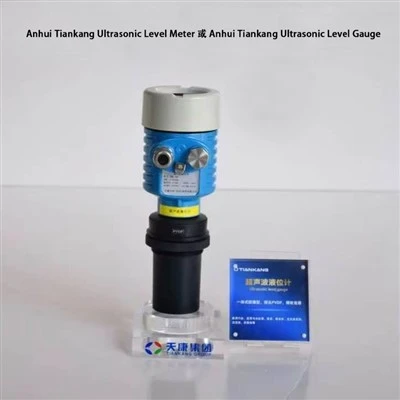
The ultrasonic level gauge (TC) uses non-contact air-based distance measurement. The probe sends ultrasonic waves to the liquid surface. The instrument calculates liquid level based on the echo return time. The biggest advantage is easy installation. The sensor never contacts the media. There is no wear. This suits clean water tanks, wastewater tanks, channels, and atmospheric non-volatile storage tanks. Foam, strong steam, and thick fog absorb sound waves and cause measurement failure. The gauge is not suitable for volatile media or viscous liquids.
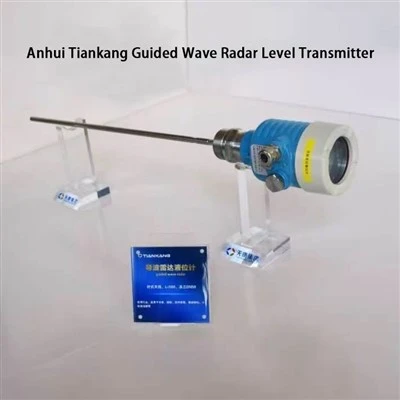
Electronic water level gauge options include the guided wave radar level gauge (TWR). This uses microwave pulses transmitted along a guided wave rod or cable. This is a contact radar technology. It is unaffected by foam, steam, dust, or internal obstructions. Accuracy is very high at ±1 to 3mm. It withstands high temperature (up to 300°C) and high pressure (PN40). It suits demanding conditions like crude oil tanks, chemical reactors, high-temperature pressure vessels, and powder silos. Coating on the guided wave rod may affect signals in highly sticky media.


Capacitance, Float, and Magnetic Technologies
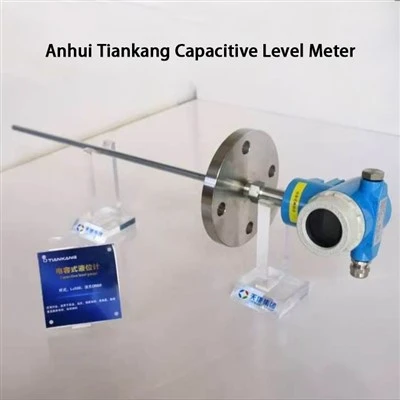
The capacitive/radio frequency admittance level gauge (UYB) uses changes in capacitance between electrodes to measure level. The radio frequency admittance type resists coating effects. It handles high temperature and high pressure. The structure is simple. It measures liquids, viscous slurries, and powders. It suits acid and alkaline storage tanks, bitumen, coal powder silos, and high-pressure reactors. It does not work well with media that have very low dielectric constants (like anhydrous pure oil).
The float level gauge (UQK) uses a float that rises and falls with the liquid surface. This operates a magnetic reed switch or transmitter. The structure is simple. Cost is low. It can be used as a level switch for alarms or as a continuous transmitter. It suits small water tanks, wastewater tanks, and atmospheric corrosion-proof storage tanks. It does not suit high temperature, high pressure, or viscous media.
The magnetic level gauge (UHZ) uses magnetic coupling to flip indicators for local visual level reading. It can be equipped with 4-20mA remote transmission and high/low level alarms. It suits boilers, reactors, chemical storage tanks, and heating equipment. The on-site visual display is its biggest advantage.
Float Type for High-Pressure Applications
The float type level gauge (UT) works on the Archimedes buoyancy principle. It converts signals through a torque tube. The pressure resistance is strong. It suits high-pressure petroleum, refining units, distillation towers, and applications with stable liquid density.
We provide complete services from selection consulting, custom manufacturing, to on-site commissioning. All level gauges can be equipped with 4-20mA, HART, RS485 outputs, and ExdⅡCT6 flameproof configurations. Export shipments include CE, ATEX/IECEx, and EAC certifications.

Product Specifications
|
Level Gauge Type |
Measuring Principle |
Applicable Media |
Range |
Accuracy |
Key Advantages |
Key Limitations |
|
Ultrasonic (TC) |
Airborne sound reflection (non-contact) |
Clean water, wastewater, atmospheric non-volatile liquid |
0-30m |
0.5-1% FS |
Non-contact, No wear, Simple installation |
Affected by foam/steam/fog |
|
Guided Wave Radar (TWR) |
Microwave reflection along probe (contact) |
Liquid, slurry, powder (ε≥1.5) |
0-35m |
±1-3mm |
Resists foam/steam/dust, High temp/pressure |
Coating on probe in sticky media |
|
Capacitive/Admittance (UYB) |
Capacitance change (contact) |
Liquid, slurry, powder |
0-30m |
0.5-1% FS |
High temp/pressure, Anti-coating (RF type) |
Poor accuracy with very low dielectric constant |
|
Float (UQK) |
Buoyancy + magnetic reed switch |
Clean water, wastewater, atmospheric liquid |
0-6m |
On/off / ±5mm |
Simple structure, Low cost |
Not for high temp/pressure/viscous |
|
Magnetic (UHZ) |
Magnetic coupling flip display |
Chemical tanks, boilers, reactors |
0-10m |
±10mm |
On-site visual, Remote transmission optional |
Not for strong vibration |
|
Float (UT) |
Archimedes buoyancy |
High-pressure oil, refining, distillation |
0-6m |
0.5-1% FS |
Strong pressure resistance, Suits high pressure |
Only for stable density liquids |
|
Warranty Period |
18 months |
18 months |
18 months |
18 months |
18 months |
18 months |
Hot Tags: electronic water level gauge, China electronic water level gauge manufacturers, suppliers, factory