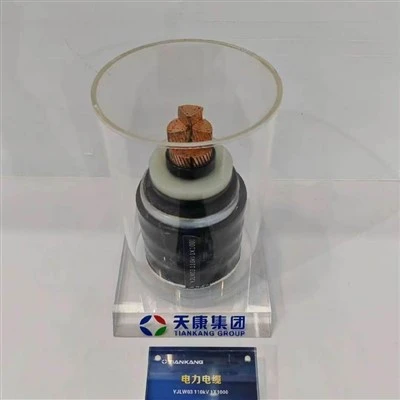
In the realm of power distribution and transmission, power cables serve as the vital arteries that carry electrical energy from its source to end - users. At the heart of these power cables lies the conductor, a component whose role is both fundamental and multifaceted. As a power cables supplier, I have witnessed firsthand the pivotal significance of conductors in ensuring the efficient, reliable, and safe operation of electrical systems.
Fundamental Function of Conductors
The most basic function of a conductor in a power cable is to provide a low - resistance path for the flow of electric current. In electrical engineering, metals are predominantly used as conductors due to their abundance of free electrons. When an electric potential difference is applied across the ends of a conductor, these free electrons start to move in an orderly manner, creating an electric current. Copper and aluminum are the two most commonly used materials for conductors in power cables. Copper has excellent electrical conductivity, high ductility, and good corrosion resistance. Aluminum, on the other hand, is lighter and less expensive than copper, making it a popular choice for large - scale power transmission projects.
For instance, in long - distance high - voltage transmission lines, conductors play an irreplaceable role. The High Tension Electric Cable we supply is designed to carry extremely large amounts of electrical power. The conductors in these cables are carefully engineered to minimize power loss during transmission. The lower the resistance of the conductor, the less electrical energy is converted into heat, which is a form of wasted energy. As power losses increase with the square of the current, using high - quality conductors is essential for economic and efficient power transmission.
Impact on Cable Performance
The quality and characteristics of the conductor directly impact the overall performance of the power cable. One key aspect is the current - carrying capacity, also known as ampacity. Ampacity is determined by factors such as the cross - sectional area of the conductor, the material used, and the ambient temperature. A larger cross - sectional area allows for more electrons to flow, thus increasing the current - carrying capacity. However, increasing the cross - sectional area also increases the cost and weight of the cable.
In addition, the conductor's resistance changes with temperature. As the temperature rises, the resistance of the conductor increases, which in turn reduces the cable's ampacity. Therefore, proper thermal management is crucial for power cables. Our Outdoor Low Voltage Cable is designed to withstand outdoor environmental conditions, including variations in temperature. The conductors in these cables are selected and insulated in a way that can effectively dissipate heat, ensuring stable performance even in harsh outdoor environments.
Mechanical Properties
Conductors also need to possess suitable mechanical properties to withstand the rigors of installation and operation. During installation, cables are often pulled, bent, and twisted. The conductor must be strong enough to resist these mechanical stresses without breaking. For example, Aluminum Alloy Cable combines the light weight of aluminum with improved mechanical strength through alloying. This makes it easier to install in large - scale projects where handling heavy cables can be a challenge.
Moreover, in some applications, such as in industrial settings or in areas prone to seismic activity, the cables may be subject to vibrations and shocks. The conductor should be able to maintain its integrity under these dynamic loads. Our cables are designed with conductors that have good flexibility and resilience, ensuring long - term reliability even in demanding mechanical environments.
Safety Considerations
Conductors play a crucial role in ensuring the safety of power cable systems. A faulty or damaged conductor can lead to a variety of safety hazards, including electrical fires, short - circuits, and electrocution. For example, if the conductor has a high resistance due to poor quality or damage, it will generate excessive heat. This heat can ignite the surrounding insulation material, leading to a fire.
To prevent these safety risks, we implement strict quality control measures during the manufacturing of conductors. We use high - purity metals and advanced manufacturing processes to ensure the uniformity and integrity of the conductors. All our power cables are also regularly tested to meet international safety standards. This includes tests for insulation resistance, dielectric strength, and temperature rise, which are all related to the performance and safety of the conductors.
Adaptability to Different Applications
Power cables are used in a wide range of applications, from residential buildings to industrial complexes and from data centers to renewable energy farms. The role of the conductor is to adapt to the specific requirements of each application. For residential use, low - voltage cables with smaller conductors are typically sufficient to meet the electrical needs of household appliances. These cables need to be safe, easy to install, and cost - effective.
In industrial settings, on the other hand, high - power machinery requires cables with high current - carrying capacities. Conductors in industrial cables must be able to handle large - scale, continuous operation without overheating. In data centers, where reliability is of utmost importance, the conductors need to provide stable power with minimal electromagnetic interference.
Renewable energy sources, such as solar and wind power, also place unique demands on power cables. In solar farms, cables are often exposed to sunlight and harsh weather conditions. The conductors need to be resistant to UV radiation and environmental degradation. Our cables are designed to meet these diverse application requirements, with conductors optimized for different purposes.
The Role in Power Grid Modernization
As the power grid undergoes modernization, the role of conductors in power cables becomes even more significant. With the increasing integration of renewable energy sources, smart grids, and electric vehicles, the power demand is becoming more dynamic. Conductors need to be able to handle variable power flows and bidirectional energy transfer.
For example, in a smart grid, power cables may need to transfer power from distributed energy resources, such as rooftop solar panels, back to the grid. This requires conductors with high - quality electrical characteristics and advanced control mechanisms to ensure stable power flow and grid stability. Our power cables are designed to be compatible with the emerging technologies and requirements of the modern power grid, with conductors that can support the efficient operation of these new - generation power systems.


Conclusion
In conclusion, the conductor is the core component of a power cable, playing a central role in electrical conductivity, cable performance, mechanical integrity, safety, and adaptability to different applications. As a power cables supplier, we are committed to providing high - quality conductors and power cables that meet the diverse needs of our customers. Whether you are involved in a small - scale residential project or a large - scale industrial development, our Outdoor Low Voltage Cable, Aluminum Alloy Cable, and High Tension Electric Cable are designed to provide reliable and efficient power transmission.
If you are interested in our power cables or have any specific requirements, we invite you to contact us for a detailed discussion. Our team of experts is ready to assist you in selecting the most suitable cables for your project, ensuring optimal performance and safety. We look forward to the opportunity to collaborate with you on your next power - related venture.
References
- Grover, A. (2018). Electrical Power Systems. Wiley - India.
- McLyman, C. W. (2019). Transformer and Inductor Design Handbook. CRC Press.
- Stevenson, W. D. (2017). Elements of Power System Analysis. McGraw - Hill Education.