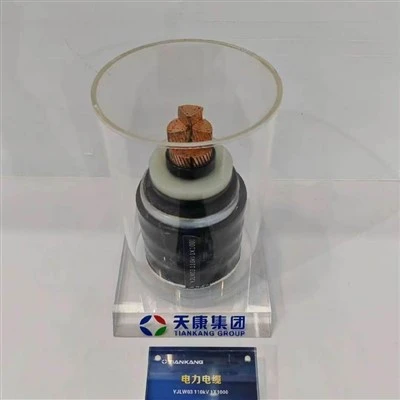
As a provider of High Temperature Resistant Cable, I often encounter inquiries regarding the thermal conductivity of these specialized cables. Understanding the thermal conductivity of high temperature resistant cables is crucial, as it directly relates to their performance, safety, and suitability for various applications. In this blog post, I will delve into the concept of thermal conductivity, its significance in high temperature resistant cables, and the factors that influence it.
Understanding Thermal Conductivity
Thermal conductivity is a measure of a material's ability to conduct heat. It is defined as the quantity of heat that passes through a unit area of a material in a unit time, under a unit temperature gradient. In simpler terms, it quantifies how easily heat can move through a substance. Materials with high thermal conductivity transfer heat quickly, while those with low thermal conductivity are better insulators and impede heat transfer.
The unit of thermal conductivity is watts per meter-kelvin (W/m·K). A high value of thermal conductivity indicates that the material is an efficient conductor of heat, whereas a low value means it is a poor conductor, or a good insulator. For example, metals like copper and aluminum have high thermal conductivities (copper: approximately 400 W/m·K, aluminum: about 205 W/m·K), making them excellent conductors of heat and electrical current. In contrast, materials like rubber and plastic have low thermal conductivities, typically in the range of 0.1 - 0.5 W/m·K, which makes them suitable for insulation purposes.
Significance of Thermal Conductivity in High Temperature Resistant Cables
In high temperature resistant cables, thermal conductivity plays a vital role in several aspects:


Heat Dissipation
When a cable is in use, electrical current flowing through it generates heat due to the cable's electrical resistance. If this heat is not dissipated effectively, it can accumulate, leading to an increase in the cable's temperature. Excessive temperature can damage the cable's insulation, reduce its lifespan, and even pose a fire hazard. Cables with appropriate thermal conductivity can efficiently transfer the generated heat away from the conductor, maintaining a safe operating temperature.
Performance and Efficiency
The ability to manage heat also affects the cable's electrical performance. High temperatures can increase the resistance of the conductor, leading to power losses and reduced efficiency. By ensuring proper heat dissipation through suitable thermal conductivity, the cable can maintain its electrical performance and operate more efficiently.
Safety
Safety is of utmost importance in high temperature environments. Cables with poor thermal conductivity may overheat, causing the insulation to melt or catch fire. High temperature resistant cables are designed to withstand extreme conditions, and their thermal conductivity is a key factor in preventing such safety hazards.
Factors Affecting the Thermal Conductivity of High Temperature Resistant Cables
Conductor Material
The conductor is the part of the cable through which the electrical current flows. Different conductor materials have different thermal conductivities. Copper, for instance, is a popular choice for cable conductors due to its high electrical and thermal conductivity. Aluminum is also used, although its thermal conductivity is lower than that of copper. The choice of conductor material depends on various factors, including cost, weight, and the specific requirements of the application.
Insulation Material
The insulation material surrounds the conductor and provides electrical insulation. It also plays a role in determining the cable's thermal conductivity. High temperature resistant cables use specialized insulation materials that can withstand extreme temperatures. These materials typically have low thermal conductivities to minimize heat transfer from the conductor to the surrounding environment. Examples of insulation materials used in high temperature resistant cables include silicone rubber, fluoropolymers (such as PTFE), and ceramic fiber.
Cable Construction
The construction of the cable, including the number of conductors, their arrangement, and the presence of additional layers such as shielding or armor, can also affect its thermal conductivity. For example, a cable with multiple conductors may generate more heat, and the arrangement of these conductors can influence how effectively the heat is dissipated. Shielding materials, such as metallic foils or braids, can have an impact on thermal conductivity, as they may either enhance or impede heat transfer depending on their design and composition.
Environmental Conditions
The operating environment of the cable can significantly affect its thermal conductivity. Factors such as temperature, humidity, and air flow can all influence how heat is transferred through the cable. In high temperature environments, the cable may need to dissipate more heat, and the surrounding air temperature can affect the rate of heat transfer. Similarly, high humidity can reduce the effectiveness of insulation materials, potentially increasing the cable's temperature. Air flow around the cable can enhance heat dissipation by carrying away the heat, while a lack of air flow can lead to heat accumulation.
Measuring Thermal Conductivity in High Temperature Resistant Cables
Accurately measuring the thermal conductivity of high temperature resistant cables is a complex process that requires specialized equipment and techniques. One common method is the guarded hot plate method, which involves placing the cable sample between two heated plates and measuring the heat flow through the sample under a controlled temperature gradient. Another method is the hot wire method, where a heated wire is placed inside the cable sample, and the rate of heat transfer from the wire to the surrounding material is measured.
These measurements are typically carried out in a laboratory setting to ensure accurate and repeatable results. The thermal conductivity values obtained from these measurements are used to characterize the cable's performance and to compare different cable designs and materials.
Applications of High Temperature Resistant Cables
High temperature resistant cables are used in a wide range of applications where traditional cables would not be able to withstand the extreme conditions. Some common applications include:
Industrial Furnaces and Kilns
These environments require cables that can operate at high temperatures for extended periods. High temperature resistant cables are used to power heating elements, control systems, and sensors in industrial furnaces and kilns.
Aerospace and Aviation
In the aerospace and aviation industries, cables must be able to withstand high temperatures, vibration, and electromagnetic interference. High temperature resistant cables are used in aircraft engines, avionics systems, and satellite communications.
Power Generation
Power plants, including nuclear, coal-fired, and gas-fired plants, utilize high temperature resistant cables in various applications, such as connecting generators, transformers, and control systems.
Automotive and Transportation
In the automotive industry, high temperature resistant cables are used in engine compartments, where they are exposed to high temperatures and vibrations. They are also used in electric and hybrid vehicles for power transmission and battery management systems.
Choosing the Right High Temperature Resistant Cable
When selecting a high temperature resistant cable, it is essential to consider the following factors:
Temperature Rating
The temperature rating indicates the maximum temperature at which the cable can safely operate. It is important to choose a cable with a temperature rating that exceeds the expected operating temperature of the application.
Thermal Conductivity
As discussed earlier, the thermal conductivity of the cable affects its ability to dissipate heat. Consider the thermal conductivity requirements of the application to ensure efficient heat transfer and prevent overheating.
Electrical Properties
The electrical properties of the cable, such as resistance, capacitance, and inductance, are also important. These properties can affect the cable's performance and compatibility with the electrical system.
Flexibility and Durability
Depending on the application, the cable may need to be flexible and durable. Consider the bending radius, tensile strength, and abrasion resistance of the cable to ensure it can withstand the mechanical stresses of the application.
Conclusion
In conclusion, the thermal conductivity of high temperature resistant cables is a critical factor that influences their performance, safety, and suitability for various applications. Understanding the concept of thermal conductivity, its significance, and the factors that affect it is essential for choosing the right cable for your specific needs. As a High Temperature Resistant Cable provider, we are committed to offering high-quality cables with optimal thermal conductivity and other performance characteristics.
If you are in the market for high temperature resistant cables or have any questions regarding thermal conductivity and cable selection, we encourage you to [initiate a contact for procurement discussions]. Our team of experts is ready to assist you in finding the perfect solution for your application.
References
- Holman, J. P. (2010). Heat Transfer. McGraw-Hill Education.
- Incropera, F. P., & DeWitt, D. P. (2001). Introduction to Heat Transfer. Wiley.
- Schmidt, E. (1929). Heat conduction. Springer.