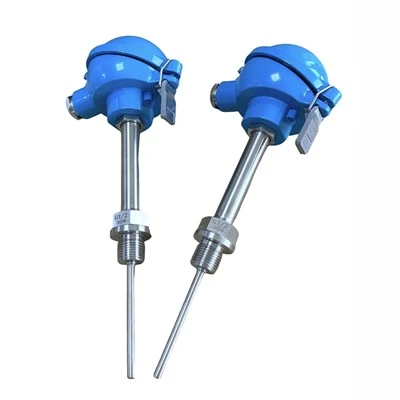
Platinum-rhodium thermocouples are a traditional temperature measuring component, known for their stable thermoelectric performance and strong oxidation resistance, suitable for continuous use in oxidative or inert atmospheres. The long-term operating temperature is 1600℃, and the short-term temperature is 1800℃.
How to identify faults caused by platinum-rhodium thermocouple input?
1. If the connections are correct according to the instrument wiring diagram, but after powering on the instrument, the upper digital display shows negative values, it indicates that the thermocouple connected to the instrument has the "+" and "-" terminals reversed. Simply switch them.
2. If the wiring is correct but during operation the temperature on the upper digital display differs from the actual temperature by 30ºC~60ºC, or even more, it indicates the instrument's type is mismatched with the thermocouple. According to the voltage (mV) values corresponding to temperatures (ºC) for different thermocouple types B, S, K, E, at the same temperature, B generates the smallest mV value, S slightly higher, K larger, and E the largest. Use this principle to judge.
3. When correctly wired and powered on, the instrument first shows the thermocouple type, then the range, then measures the set temperature on the lower display while the upper display shows the measured temperature. If the upper display shows not the heater temperature but "OVER", "0000", or "000", there is a fault at the instrument input. Test as follows:
a) Remove the thermocouple from the input and short the input with any wire. If the upper display shows around room temperature, internal wiring of the thermocouple is open and the thermocouple should be replaced. If the same fault occurs, the instrument input may be damaged during transport and needs replacing.
b) Remove the faulty thermocouple and use one from a neighbouring instrument of the same type. If upon powering the original instrument now displays the heater temperature, the original thermocouple has an open internal connection and should be replaced. If the problem persists, the instrument input is damaged and should be replaced.
c) Remove the faulty thermocouple and use a multimeter on the R*1 setting to measure the thermocouple resistance. If the multimeter shows a very high resistance, the thermocouple connection is open and should be replaced. If there is some resistance, the instrument input may be faulty and should be replaced.
How to prevent interference when measuring temperature?
When using the reference end grounding method, one end of the output of the platinum-rhodium thermocouple (or compensation wire) is grounded through a sufficiently large capacitor (the larger the capacitor, the better, if conditions allow). The measurement end grounding method involves grounding the thermocouple measurement end by connecting a metal wire from the measurement end to the ground. This method is very effective against high-temperature leakage interference. When choosing the metal wire, it should be high-temperature resistant and harmless to the thermocouple electrodes. During the use of thermocouples, there are always many factors interfering with our measurement accuracy, which is a tricky issue. We need to be ready to prevent this kind of interference when using thermocouples. With the improvement of current industrial production levels, the use of thermocouples is very common, so their measurement accuracy is something worth paying attention to!
How should a thermocouple be dealt with when it encounters interference during use?
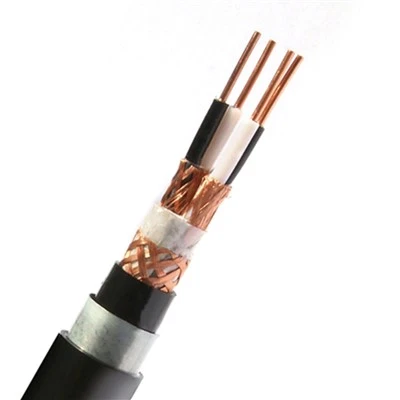
Shielding method: Pass the thermocouple's compensating wires through an iron pipe or other metal shield to prevent electromagnetic and high-voltage electric field interference. When using this method, ensure that the iron pipe and shield are properly grounded, and twist the compensating wires together.
Isolation method: Install the thermocouple suspended so that it does not touch the refractory bricks of the furnace wall, and use insulating materials between the thermocouple and the bracket. This method can effectively prevent high-temperature leakage interference. Grounding method: Ground the measurement circuit to direct interference into the earth, ensuring the instrument's measurement accuracy. There are two forms of this method: the first is grounding the thermocouple reference end, and the second is grounding the thermocouple measuring end. Depending on the temperature measurement and usage environment, the prevention method can vary, but the ultimate goal is to minimize interference and achieve the most accurate temperature measurement. Therefore, careful attention must be paid to handling interference effectively during prevention.