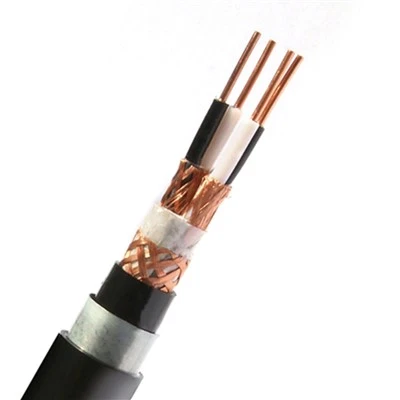
The core technology of specialty cables lies in the targeted design of their materials, structures, manufacturing processes, and performance characteristics. High-performance materials-such as fluoroplastics, silicone rubber, polyethersulfone (PES), and polyether ether ketone (PEEK)-are typically selected to meet requirements for high-temperature and corrosion resistance. Structural designs incorporate features like multi-layer insulation, shielding, and armor to enhance mechanical strength, interference resistance, and environmental adaptability. Manufacturing processes must ensure the cable can withstand complex operating environments, meeting standards for abrasion, temperature extremes (heat and cold), tensile stress, repeated bending, rodent and insect resistance, flame retardancy, fire resistance, UV and radiation resistance, and electromagnetic compatibility; electrical performance testing is a critical step in ensuring reliability.
Future technological development in the industry is driven by market demand and is characterized by trends such as green and low-carbon practices, intelligent manufacturing, and research into new materials and processes. The green and low-carbon trend aligns with "dual carbon" goals, making cables for new energy and smart grids, as well as eco-friendly specialty cables (such as low-smoke, zero-halogen, flame-retardant cables), key drivers of growth. Production processes are transitioning toward automation, digitalization, and intelligence. Research into new materials and processes focuses on areas such as conductor alloying and miniaturization, shielding materials for high-voltage and ultra-high-voltage applications, and insulation and sheathing materials for specialty cables-including those designed for industrial flexibility.
Corporate R&D and innovation continue to drive technological progress across the industry. Key areas of development include crush- and bend-resistant cables, wires and cables for industrial robots, umbilical cables for astronaut extravehicular activity (EVA), marine cables, load-bearing underwater sensing cables, and watertight cables. Crush- and bend-resistant cables are utilized in sectors such as smart mining systems, while the industry is also developing high-speed copper cable connector technologies to support efficient data transmission solutions for future artificial intelligence applications. In the realm of deep-water cabling, R&D focuses on watertight cables capable of withstanding depths of 1,000 meters or more and 35kV flexible high-voltage rubber-sheathed cables with nano-fillers for coal mining; deep-water watertight cables must pass technical validations such as 12MPa longitudinal watertightness tests. Additionally, research is being conducted on materials for flexible inorganic mineral-insulated fire-resistant cables, wind energy cables, and robotic cables. In the nuclear power sector, there are examples of the joint development of "nuclear safety-grade cables with an 80-year service life for nuclear power plants." High-temperature superconducting cables are being prioritized as a cutting-edge technology to meet the demand for highly reliable, low-loss power transmission.
Looking ahead, the development of specialty cables will focus on meeting the requirements of increasingly extreme environments and emerging application scenarios. Key trends include maximizing performance, integrating functions and intelligence, and catering to emerging strategic industries. Performance maximization entails characteristics such as high- and low-temperature resistance, lightweight design, radiation and electromagnetic interference resistance, high flexibility, and extended service life. Functional integration and intelligence involve developing smart cables capable of status sensing and data transmission to meet the needs of smart grids and the Industrial Internet. Regarding alignment with emerging strategic industries, the focus is on developing specialty cables for sectors such as artificial intelligence, the low-altitude economy, biomedicine, integrated circuits, aerospace, marine engineering, and new energy (e.g., offshore wind and photovoltaics).