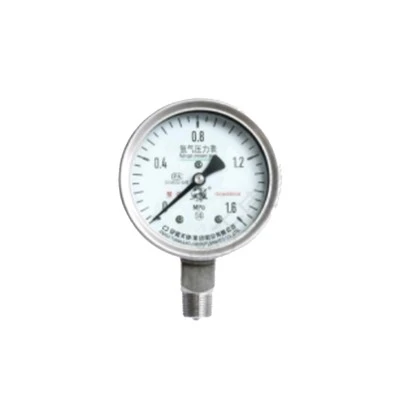
Pressure instruments should be installed in stable, dry, and well-ventilated locations, away from direct sunlight and damp environments. They must be securely mounted using appropriate brackets or fixtures to prevent wobbling or exposure to external vibrations. When connecting piping, ensure proper sealing and secure fastening of connections to prevent leaks. For electrical pressure instruments, strictly follow the instruction manual for power connection, ensuring the power supply is stable and meets specifications.
Before use, verify that all connections are correct, power cables are undamaged, and the surrounding environment is safe. Configure the instrument's parameters according to the required pressure range and accuracy specifications to ensure data precision. Avoid exceeding the instrument's rated range during operation to prevent equipment damage or safety hazards; operating beyond the specified range is strictly prohibited. When reading the instrument, pay close attention to units, ranges, and accuracy specifications to avoid misinterpretation. Protect the instrument from impact and vibration to maintain measurement accuracy and service life. Perform regular calibration and maintenance to ensure accuracy and stability, and replace parts promptly when necessary.
To maintain measurement accuracy, pressure instruments must be periodically submitted to authorized metrological agencies for verification. Digital pressure gauges that are infrequently used should be powered on once a month to keep them in good working condition. For piston-type pressure gauges, regularly replace the hydraulic fluid-ensuring cleanliness and appropriate viscosity-and periodically calibrate the piston and weights while inspecting the piston and cylinder liner for sealing integrity and surface finish. Digital pressure gauges require a warm-up period of at least 30 minutes after power-on and proper zero-point calibration before use. Piston-type pressure gauges must be operated in a stable environment (temperature 20±2°C, humidity 45%–65%) free from vibration; preheat the equipment before operation, apply or release pressure slowly, ensure the piston is suspended vertically, and take readings only after the rotation has stabilized.
Proper installation, usage, and maintenance ensure the normal operation and extended service life of pressure instruments, enabling them to provide precise pressure indications for industrial automation and control, thereby effectively facilitating automated regulation and alarm functions.