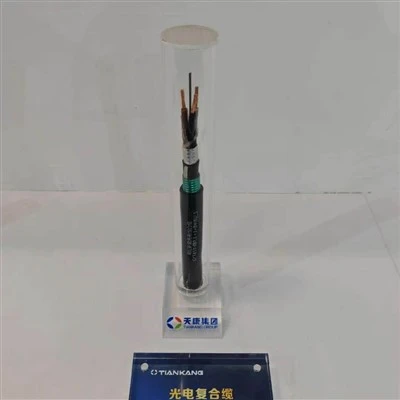
Yo, what's up everyone! I'm an Aluminum Alloy Cable supplier, and today I wanna chat about one of the most crucial things about our cables - the ampacity.
First off, let's break down what ampacity actually is. Ampacity, in simple terms, is the maximum amount of electrical current a cable can safely carry without getting too hot and causing damage. You know, like when you try to pour too much water through a small pipe, it'll either burst or the flow will be really bad. Same thing with cables and electricity. If you push too much current through a cable that can't handle it, you're gonna run into some serious problems, like overheating, insulation damage, and even potential fire hazards.
Now, when it comes to aluminum alloy cables, their ampacity is influenced by a bunch of factors. One of the biggies is the cross - sectional area of the cable. Just like a wider pipe can handle more water, a cable with a larger cross - sectional area can carry more electrical current. Think of it this way: more space for the electrons to flow through. So, if you need a cable to handle a high - current load, you'll want to go for one with a larger cross - sectional area.
Another factor is the type of insulation used on the cable. Different insulation materials have different temperature ratings. Some can withstand higher temperatures without breaking down, which means they allow the cable to carry more current. For example, if you have a cable with a high - temperature - rated insulation, it can handle more heat generated by the current flowing through it, and thus can have a higher ampacity.
The ambient temperature also plays a huge role. If you're installing the cable in a hot environment, say in a factory where there are a lot of heat - generating machines, the cable will already be starting at a higher temperature. This means it can't handle as much additional heat from the current flow, which in turn reduces its ampacity. On the other hand, if the cable is installed in a cooler place, like a well - ventilated basement, it can carry more current because it has more room to heat up before reaching dangerous levels.
The installation method is also key. If the cable is installed in a way that allows for good ventilation, like being run in an open tray, it can dissipate heat better. This means it can handle more current compared to a cable that's installed in a tight conduit with poor ventilation. You see, when heat can't escape quickly, the cable temperature rises faster, and this limits the amount of current it can carry.
Now, let's talk about how aluminum alloy cables stack up against other types of cables in terms of ampacity. Aluminum alloy cables have some unique properties that make them a great choice in many situations. They're lighter than copper cables, which makes them easier to install, especially in large - scale projects. And while copper has better conductivity than pure aluminum, aluminum alloy cables have improved conductivity compared to regular aluminum cables.
In some cases, aluminum alloy cables can have comparable ampacity to copper cables, depending on the specific application. For example, in low - voltage applications where the distance is relatively short, aluminum alloy cables can do the job just as well as copper cables. And because they're more cost - effective, they can be a great option for budget - conscious projects.


But it's not all sunshine and rainbows. In high - current, high - temperature applications, copper cables might still have an edge in terms of ampacity. Copper has a higher melting point and better thermal conductivity, which means it can handle more heat and current under extreme conditions. However, with the right design and selection, aluminum alloy cables can still be used effectively in a wide range of applications.
If you're in the market for high - quality electrical cables, we've got a couple of great options for you. Check out our High Tension Electric Cable for heavy - duty, high - voltage applications. And for outdoor projects, our Outdoor Low Voltage Cable is a real game - changer. Of course, if you're interested in the star of the show today, our Aluminum Alloy Cable is designed to offer great performance and value.
So, if you're looking for reliable cables and want to discuss ampacity, cable sizing, or any other questions related to your electrical needs, don't hesitate to reach out. We're here to help you find the best cable solutions for your projects. Whether you're a contractor working on a new building, an electrician doing a retrofit, or a facility manager needing to upgrade your electrical system, we've got the expertise and the products to meet your requirements.
References:
- Electrical Wiring Handbook
- National Electrical Code
Hope this info helps you understand aluminum alloy cable ampacity better. Catch you later!