The wire and cable manufacturing industry is a major supporting sector of the national economy; its development is closely linked to macroeconomic conditions, national policies, industrial policy trends, and the growth of related industries. Driven by the needs of national economic development, my country's wire and cable industry underwent a phase of explosive expansion, resulting in an overall state of oversupply.
As national industrial policies continue to guide and upgrade the sector, the industry landscape is set to shift; enterprises aligned with the requirements of the new era will thrive, while special-purpose cables-or "specialty cables"-offer significant growth potential. Currently, driven by national strategies such as the "Dual Carbon" goals, the advancement of new industrialization, and the pursuit of high-quality development, the specialty cable industry faces a new set of development conditions.
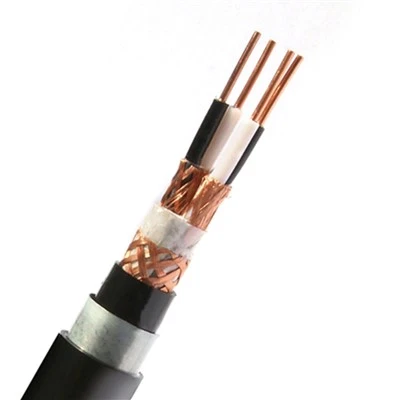
Specialty cables are designed for specific applications and environments; they generally require the establishment of internal corporate standards. These products feature unique properties and structures. Compared to mass-market general-purpose cables, specialty cables are characterized by higher technical content, stricter operating conditions, smaller production batches, and higher added value. They can be broadly categorized into four types: high-temperature resistant cables, functional cables, new eco-friendly cables with green insulation, and cables with specialized structures or applications.
Specialty cables differ from standard cables in that they are designed for unique environments and possess specialized functions-such as resistance to high temperatures, strong acids and alkalis, or termite damage. High-temperature resistant cables, for instance, are primarily used in sectors like energy development, iron and steel, aerospace, oil extraction, and metal smelting. Low-inductance cables offer excellent heat dissipation; they accommodate high cooling water flow rates without clogging or restricting flow. Low-noise cables are mainly used in fields requiring the measurement of minute signals-such as medicine, industry, and national defense-where they can detect low-level signals. Other categories include functional cables and new eco-friendly cables.
The development of specialty cables is diversifying, trending toward intelligence, sustainability (green technology), and high-end capabilities. Green sectors-including cables for new energy, smart grids, and eco-friendly specialty applications-are emerging as new engines of growth. Major defense industry enterprises, tasked with developing modern and high-tech military equipment, have a significant demand for lightweight, high-temperature-resistant cables. In the construction sector, the primary cables used are double-layered, flame-retardant, and high-temperature-resistant types, as well as eco-friendly, low-smoke, zero-halogen cables, chosen mainly to mitigate fire risks. As energy supplies on the mainland become increasingly strained, oil and natural gas extraction has shifted toward offshore operations, driving up the demand for integrated cables in the marine sector. Meanwhile, the booming domestic civil aviation industry-particularly with the extensive use of cables in Boeing aircraft-relies heavily on lightweight, compact, and high-temperature-resistant cables, such as those utilizing irradiation or silane cross-linking technologies. Among the various types of specialty cables, high-temperature superconducting (HTS) power transmission cables hold substantial market potential. There is robust demand for high-temperature cables in applications requiring the short-distance transmission of high currents; for instance, HTS cables show great promise in sectors like new energy, offering up to five times the transmission capacity of conventional cables while requiring 70% less space.