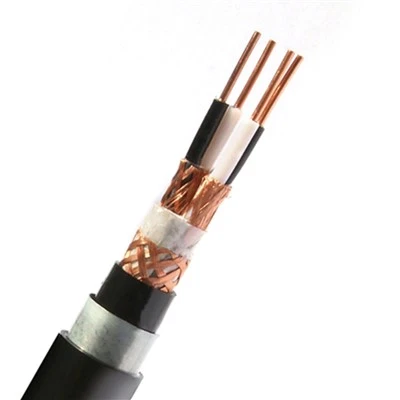
Power cables have been in use for over a century. In 1879, the American inventor T.A. Edison created a cable by wrapping a copper rod in jute, inserting it into an iron pipe, and filling the space with an asphalt mixture; he installed this cable in New York, pioneering underground power transmission. The following year, the British inventor Callender developed power cables insulated with asphalt-impregnated paper. In 1889, S.Z. Ferranti (UK) installed a 10 kV oil-impregnated paper-insulated cable between London and Deptford. By 1908, a 20 kV cable network had been established in the UK, and the application of power cables became increasingly widespread. In 1911, Germany installed a 60 kV high-voltage cable, marking the beginning of high-voltage cable development. In 1913, M. Höchstädter (Germany) developed the "H-type" cable (featuring individual phase shielding); this innovation improved the internal electric field distribution and eliminated tangential stress on the insulation surface, representing a milestone in the evolution of power cables. In 1952, Sweden installed a 380 kV extra-high-voltage (EHV) cable at a power plant in the north, realizing the practical application of EHV cables. By the 1980s, ultra-high-voltage (UHV) power cables rated at 1100 kV and 1200 kV had been manufactured.