First, let us review the precautions for cable installation:
I. When mining cables are installed parallel to thermal pipelines, a clearance of 2 meters must be maintained; when crossing, the clearance must be 0.5 meters.
II. When cables are installed parallel to or crossing other pipelines, a clearance of 0.5 meters must be maintained.
III. For direct-buried installations, the burial depth for 1–35 kV cables must be at least 0.7 meters.
IV. For parallel installations, the clear distance between cables must be at least 0.1 meters for 10 kV and below, and at least 0.25 meters for 10–35 kV; for crossing installations, the distance must be at least 0.5 meters.
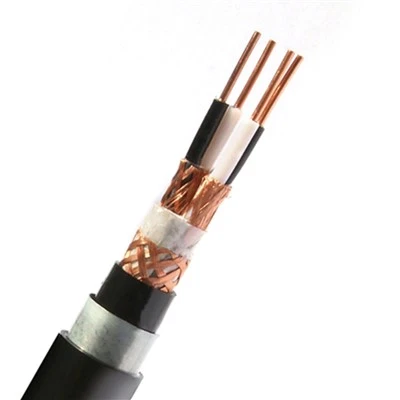
V. Regarding minimum bending radius: for multi-core cables, it must not be less than 15D; for single-core cables, it must not be less than 20D (where D is the outer diameter of the cable).
VI. Cable joints for 6 kV and above:
A. When installing cable terminations, the semi-conductive shielding layer must be stripped away. Care must be taken not to damage the insulation during the process; avoid knife marks or surface irregularities, and use sandpaper to smooth the surface if necessary. The end of the shielding layer must be even, and the graphite layer (carbon particles) must be thoroughly removed.
B. The copper shielding and steel armor of plastic-insulated cable terminations must be properly grounded. This principle applies to short-circuit connections as well to prevent induced electromotive force at the steel armor ends during unbalanced three-phase operation, which could lead to arcing or sheath combustion. Grounding leads should be made of tinned braided copper wire. When connecting to the cable's copper tape, use a soldering iron; avoid using a blowtorch, as this could damage the insulation.
C. The copper shielding for each of the three phases must be connected to the ground wire individually. Ensure that the shielding ground wire and the steel armor ground wire are brought out separately and insulated from each other; the grounding connection point should be located as low as possible. VII. Basic requirements for cable terminations and joints: a. Sound conductor connection; b. Reliable insulation (irradiation-crosslinked heat-shrinkable silicone rubber insulation material is recommended); c. Effective sealing; d. Sufficient mechanical strength to withstand various operating conditions.
VIII. Cable terminations must be protected against water ingress and corrosion from corrosive substances to prevent insulation breakdown caused by aging (such as water treeing).
IX. Cranes or forklifts must be used for loading and unloading cables; horizontal transport or laying flat is prohibited. Cable payout trailers must be used during the installation of large cables to prevent external damage or abrasion of the insulation layer caused by manual dragging.
X. If cables cannot be laid immediately, they should be stored in a dry place, protected from direct sunlight and water ingress at the cable ends.