Outdoor low voltage cables are a staple in numerous outdoor electrical applications, from lighting systems in gardens to powering small appliances in patios. Understanding the cross - sectional area of these cables is crucial for ensuring their efficient and safe operation. As a reputable Outdoor Low Voltage Cable supplier, we are well - versed in the science and practical implications of this important cable characteristic.
The Basics of Cross - Sectional Area
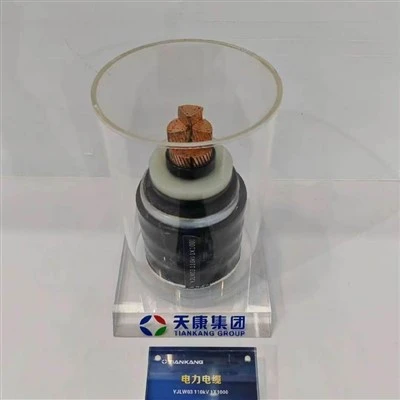
The cross - sectional area of a cable refers to the area of the cable's conductor when it is cut perpendicular to its length. In the context of outdoor low voltage cables, it is typically expressed in square millimeters (mm²). This value is a key determinant of a cable's electrical properties, as it directly influences the cable's ability to handle electrical current.
A larger cross - sectional area allows for more electrons to flow through the cable, which means it can carry a higher electrical current without overheating. This is because a larger area provides less resistance to the flow of electricity. According to Ohm's law (V = IR, where V is voltage, I is current, and R is resistance), for a given voltage, an increase in resistance will result in a decrease in current. Since resistance (R) is inversely proportional to the cross - sectional area (A) of the conductor (R = ρL/A, where ρ is the resistivity of the material and L is the length of the conductor), a larger A means lower R and thus more current can flow.
Factors Affecting the Required Cross - Sectional Area
Current - Carrying Capacity
The primary factor that dictates the necessary cross - sectional area of an outdoor low voltage cable is the amount of current it needs to carry. Different outdoor applications have varying current requirements. For example, a simple outdoor lighting system may only require a few amps, while an outdoor power supply for a small water pump or a heater could require significantly more.
As a supplier, we always recommend careful calculations of the total current draw of all the devices connected to the cable. This involves adding up the current ratings of each individual device. Once the total current is known, the appropriate cross - sectional area can be selected to ensure that the cable can handle the load without excessive voltage drop or overheating.
Cable Length
The length of the cable also plays a critical role in determining the cross - sectional area. As the length of the cable increases, the resistance of the cable also increases (as per the formula R = ρL/A). A longer cable with a small cross - sectional area will experience a greater voltage drop, which can lead to reduced performance of the connected devices.
For instance, in a large outdoor area where the cable needs to run a long distance to reach a power - consuming device, a cable with a larger cross - sectional area should be used. This helps to minimize the voltage drop and ensure that the device receives the appropriate voltage for proper operation.
Environment
Outdoor environments can be harsh, with factors such as temperature, moisture, and UV exposure affecting the cable's performance. Higher temperatures can increase the resistance of the cable, reducing its current - carrying capacity. Moisture can cause corrosion, which also affects the cable's conductivity.
When selecting the cross - sectional area for outdoor use, these environmental factors need to be taken into account. For areas with high temperatures or high humidity, a larger cross - sectional area may be required to compensate for the potential increase in resistance due to these environmental conditions.
Types of Materials and Their Impact on Cross - Sectional Area
The material of the cable conductor also influences the choice of cross - sectional area. Copper and aluminum are the two most commonly used materials in outdoor low voltage cables.


Copper is a highly conductive material, with a relatively low resistivity. This means that for a given current - carrying capacity, a copper cable can have a smaller cross - sectional area compared to an aluminum cable. Copper cables are also more resistant to corrosion, making them a good choice for outdoor applications where moisture or other corrosive elements are present.
On the other hand, aluminum is less conductive than copper but is more lightweight and less expensive. Aluminum cables typically require a larger cross - sectional area to achieve the same current - carrying capacity as copper cables. However, advancements in technology have led to the development of Aluminum Alloy Cable. These cables offer improved conductivity compared to traditional aluminum cables and are a cost - effective alternative for many outdoor applications.
Importance of Selecting the Right Cross - Sectional Area
Safety
Selecting the correct cross - sectional area is essential for safety. If the cross - sectional area is too small for the current load, the cable will overheat. Overheating can cause the insulation around the cable to melt, leading to short circuits and potentially starting a fire. This is a serious hazard, especially in outdoor areas where the fire can easily spread.
As a supplier, we take safety very seriously and always provide our customers with accurate information on the appropriate cross - sectional area for their specific applications. We ensure that all our Outdoor Low Voltage Cable products meet the necessary safety standards and are suitable for the intended use.
Efficiency
Using a cable with the correct cross - sectional area also improves the efficiency of the electrical system. When the cable has the appropriate area, the voltage drop is minimized, which means that more of the electrical energy is delivered to the connected devices. This results in better performance of the devices and can also lead to energy savings over time.
Common Cross - Sectional Areas for Outdoor Low Voltage Cables
In the market, there are several common cross - sectional areas available for outdoor low voltage cables. Some of the frequently used sizes include 1.5 mm², 2.5 mm², 4 mm², and 6 mm².
A 1.5 mm² cable is typically suitable for low - power applications such as small outdoor lighting fixtures. The 2.5 mm² cable can handle a slightly higher current and is often used for medium - power devices like small fans or low - wattage heaters. For larger appliances such as water pumps or high - power lighting systems, 4 mm² or 6 mm² cables are more appropriate.
Related Cable Products and Their Applications
In addition to outdoor low voltage cables, we also supply other types of cables, such as High Tension Electric Cable. These cables are designed for high - voltage applications and have distinct characteristics compared to outdoor low voltage cables. High tension cables are used in power transmission and distribution systems, where they need to carry large amounts of electrical energy over long distances.
While our focus is on outdoor low voltage cables, having a comprehensive understanding of different cable types allows us to provide more informed advice to our customers. Whether they are looking for a cable for a small outdoor project or a larger electrical system, we can offer the right solution.
Conclusion and Call to Action
Understanding the cross - sectional area of outdoor low voltage cables is fundamental for a successful and safe outdoor electrical installation. As a trusted Outdoor Low Voltage Cable supplier, we are committed to providing high - quality products and expert advice to our customers. Our team of professionals can assist you in selecting the right cross - sectional area based on your specific application requirements.
If you are in the process of planning an outdoor electrical project or need to replace existing cables, we invite you to get in touch with us. We can provide detailed product information, cross - sectional area recommendations, and assist you in the procurement process. Contact us today to start your journey towards a reliable and efficient outdoor electrical system.
References
- "Electrical Wiring Handbook", by Rex Miller, McGraw - Hill Education.
- "Cable Installation Manual", by the Institute of Electrical and Electronics Engineers (IEEE).
- National Electrical Code (NEC) standards for cable sizing and installation requirements.