Hey there! As a supplier of High Tension Electric Cables, I often get asked about the impedance of these cables. So, I thought I'd dive into the topic and explain it in an easy - to - understand way.
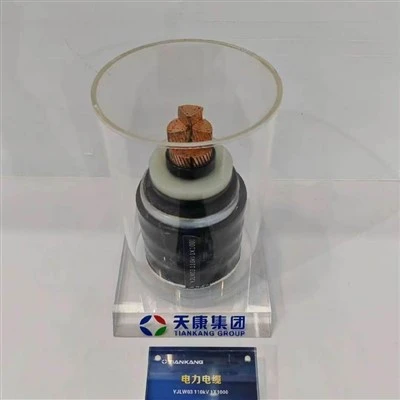
First off, let me introduce what a High Tension Electric Cable is. A High Tension Electric Cable is designed to carry high - voltage electricity over long distances. These cables are crucial in power transmission networks, whether it's from a power plant to a sub - station or between different sub - stations.
Okay, now let's talk about impedance. Impedance, in a nutshell, is like the "resistance" of an electrical circuit to the flow of alternating current (AC). But it's a bit more complex than just simple resistance because it includes both resistance (which is due to the material of the cable and opposes the flow of current) and reactance (which is caused by the cable's inductance and capacitance).
Resistance in High Tension Electric Cables
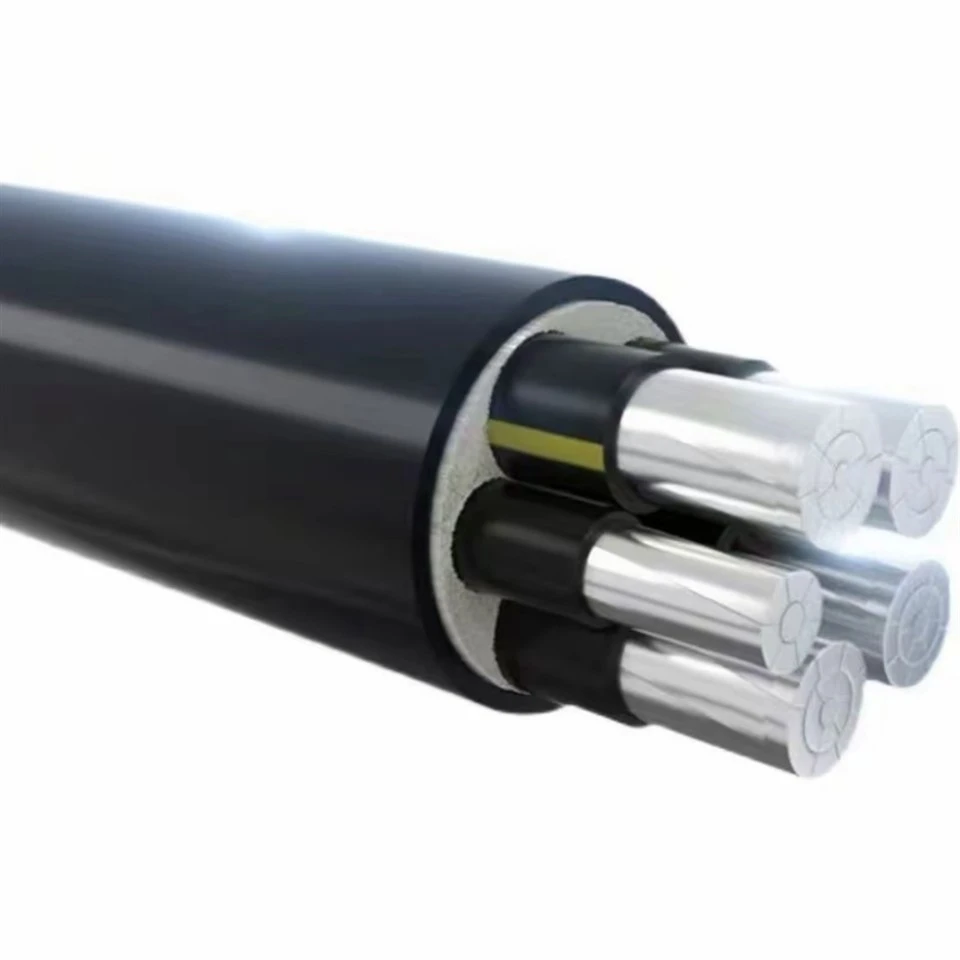
Resistance is pretty straightforward. It depends on the material the cable is made of, the cross - sectional area of the cable, and its length. For example, copper is a great conductor with low resistance, so copper cables can carry current more efficiently compared to some other materials. On the other hand, if the cable is very long or has a small cross - sectional area, the resistance will be higher. We offer different types of cables, like Aluminum Alloy Cable, which has its own set of properties in terms of resistance. Aluminum alloy cables are often used because they're more cost - effective, but their resistance characteristics are different from copper cables.
Reactance in High Tension Electric Cables
Reactance has two components: inductive reactance and capacitive reactance.
Inductive Reactance
When an AC current flows through a cable, it creates a magnetic field around the cable. This magnetic field changes with the changing current, and this change in the magnetic field induces an electromotive force (EMF) that opposes the flow of the original current. This opposition is called inductive reactance. The inductive reactance of a cable depends on the frequency of the AC current, the cable's inductance, and the length of the cable. In high - tension cables, since they are often used to transmit high - frequency AC power, the inductive reactance can be a significant factor.
Capacitive Reactance
Cables also have capacitance. A capacitor is like a storage device for electrical energy. In a cable, the capacitance exists between the conductors (if it's a multi - conductor cable) and between the conductor and the ground. When an AC voltage is applied across the cable, the capacitance allows the cable to store and release electrical energy. The opposition to the flow of current due to this capacitance is called capacitive reactance. Capacitive reactance depends on the frequency of the AC current and the cable's capacitance.
Calculating the Impedance
The impedance (Z) of a cable is calculated using the formula (Z=\sqrt{R^{2}+(X_{L}-X_{C})^{2}}), where (R) is the resistance, (X_{L}) is the inductive reactance, and (X_{C}) is the capacitive reactance. If the value of (X_{L}) is greater than (X_{C}), the cable has an inductive impedance. If (X_{C}) is greater than (X_{L}), the cable has a capacitive impedance.
Why is Impedance Important?
Impedance plays a huge role in the performance of high - tension electric cables. Firstly, it affects the power loss in the cable. Higher impedance means more power is lost as heat, which is not only wasteful but can also damage the cable over time. We don't want that, right? So, when designing and manufacturing cables, we pay close attention to minimizing the impedance to make the power transmission as efficient as possible.
Secondly, impedance matching is crucial in power systems. When the impedance of the cable matches the impedance of the power source and the load, maximum power transfer occurs. If there's a mismatch, power can be reflected back, causing interference and reducing the overall efficiency of the system.
Our High - Tension Electric Cable Offerings
At our company, we understand the importance of impedance in high - tension electric cables. That's why we use advanced manufacturing techniques and high - quality materials to produce cables with optimal impedance characteristics. Whether you need a cable for a large - scale power plant or a small - scale industrial project, we've got you covered.
We also offer Outdoor Low Voltage Cable for different applications. These cables have their own specific impedance requirements, and we ensure that they meet the industry standards.
Conclusion
Impedance in high - tension electric cables is a complex but fundamental concept. It involves a combination of resistance, inductive reactance, and capacitive reactance. Understanding impedance is essential for anyone involved in power transmission, whether you're an engineer, a project manager, or just interested in how electricity travels.

If you're in the market for high - tension electric cables or any of our other cable products, we'd love to have a chat with you. Feel free to reach out for more information about our products and how our cables can best meet your needs. We're here to provide you with the right solutions for your electrical projects.
References
- Grover, F. W. (1946). Inductance Calculations: Working Formulas and Tables. Dover Publications.
- Chapman, S. J. (2012). Electric Machinery Fundamentals. McGraw - Hill Education.